The 2026 List Industry Icons
Stacked Farm
Stacked Farm Named a 2026 Industry Icon in AI & Robotics
Recognized for applying vertical farming technology to produce fresh, locally grown ingredients year-round while reducing the environmental footprint of food production.
stackedfarm.com/
Recognized for building a fully automated indoor farming system designed to grow pesticide-free greens with machine-level consistency, complete traceability, and dramatically less dependence on weather and manual handling.
Stacked Farm has been selected as a 2026 Industry Icon in AI & Robotics by The 2026 List, brought to you by Industry & Influence, recognizing the company’s automation-led approach to agriculture, expansion into the United States, and effort to make controlled-environment farming commercially practical at scale.
Agriculture has always been shaped by uncertainty.
Weather changes.
Labor availability changes.
Pests, rainfall, heat, soil conditions, and supply-chain distance all affect what reaches the customer.
Stacked Farm is built around removing as many of those variables as possible.
The Farm Becomes a Machine
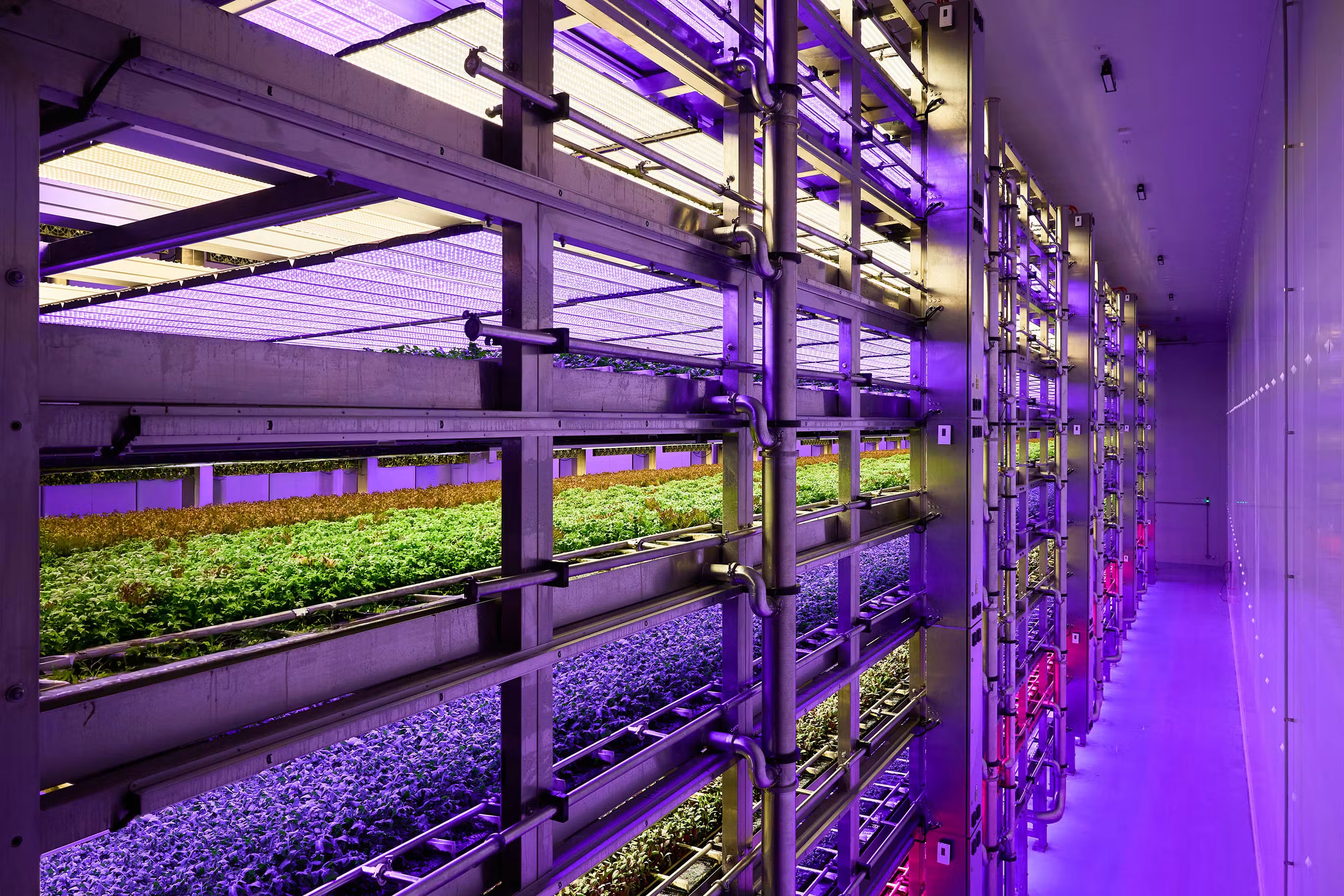
Stacked Farm grows produce indoors in highly controlled environments.
The company’s system automates the process from seeding through harvesting and packing, minimizing human contact with the crop.
That model changes the role of the farm.
Instead of managing an open biological environment and responding to conditions as they change, the company can define temperature, light, nutrients, water, timing, and movement through engineered systems.
Agriculture becomes closer to advanced manufacturing.
The goal is repeatability.
A crop should not depend on whether a particular week was too hot, too wet, or too dry.
Automation From Seed to Sealed Pack
One of Stacked Farm’s most distinctive claims is that its produce is never touched by hand from seed to sealed pack.
Automation handles movement through the growing and packaging process.
That has several potential advantages.
It can reduce labor dependence.
It can create tighter process control.
It can improve food-safety consistency by reducing unnecessary contact.
And it can generate data about how every batch was grown.
The company also says every pack can be traced back to the farm and harvest date.
Traceability becomes part of the production system rather than an administrative layer added afterward.

Pesticide-Free by Design
Stacked Farm positions its greens as pesticide-free.
Indoor controlled environments can reduce exposure to many of the pests that drive pesticide use in conventional agriculture.
That allows the growing system to focus on prevention through environmental control rather than treatment after pests arrive.
The company also sells its products as ready to eat, emphasizing that customers do not need to wash or drain the leaves before use.
That is a small consumer convenience made possible by a much larger production architecture.
The Growing Environment determines the product experience.
Coming to California
Stacked Farm is now bringing its model to the United States.
The company’s U.S. site says its produce is coming to California, positioning the expansion around locally grown, pesticide-free, automated production.
California is a meaningful test market.
It is one of the world’s most important agricultural regions, but it also faces persistent challenges around water, labor, transportation, land cost, and climate volatility.
Indoor farming does not replace conventional agriculture.
It offers a different production model for selected crops where freshness, consistency, and proximity to consumers create enough value to justify the infrastructure.
Robotics as Agricultural Infrastructure
The most important part of Stacked Farm’s story is not the vertical racks.
It is the system around them.
Robotics, automation, sensing, climate control, software, logistics, and data all have to work together.
A farm that depends on constant manual intervention does not scale like a machine.
A highly automated farm can potentially reproduce the same operating model across locations.
That repeatability is what makes the technology strategically interesting.
The company can think in terms of production systems rather than individual farms.
A New Relationship Between Food and Distance
Fresh produce loses quality over time.
Growing closer to population centers can reduce the distance between harvest and consumption.
Stacked Farm’s U.S. positioning emphasizes produce grown closer to customers and designed to remain fresher for longer.
That model can also reduce the number of external conditions between the farm and the final pack.
The value is not simply local food.
It is controlled local production.
Why Stacked Farm is a 2026 Industry Icon
The 2026 Industry Icon designation recognizes organizations demonstrating meaningful innovation, leadership, momentum, industry impact, and the ability to influence what comes next within their respective fields.
Stacked Farm was selected for treating agriculture as an automation problem and building a production system around robotics, traceability, environmental control, and minimal human handling.
Its move into California brings that model into one of the world’s most important food markets and creates an opportunity to demonstrate how controlled-environment agriculture can complement conventional supply chains.
For its use of robotics and automation, pesticide-free growing model, end-to-end traceability, and effort to make indoor agriculture repeatable at commercial scale, Stacked Farm has been selected as a 2026 Industry Icon in AI & Robotics.
Explore Stacked Farm
Explore all 100 Industry Icons
View All Honorees